Formulaires
Abonnement La Vague
Abonnement au Magazine La Vague La revue trimestrielle de l’industrie pharma & des biotech Depuis le 1er janvier 2021, seuls les adhérents reçoivent la version papier du magazine. Si […]


Abonnement au Magazine La Vague La revue trimestrielle de l’industrie pharma & des biotech Depuis le 1er janvier 2021, seuls les adhérents reçoivent la version papier du magazine. Si […]
Lipopolysaccharides / endotoxins are a subtype of pyrogens originating from the cell wall of gram-negative bacteria that are both extremely thermostable and very potent when brought into contact with the human immune system. But they are by no means the only possible pyrogenic contamination – and the growing complexity of biotechnological products increased the risk of having pyrogens present that originate from a variety of microorganisms and other sources.
There has been a huge increase in single use apparatus in the biopharmaceutical manufacturing world during the last. Many companies compete in manufacturing production tools. At Boccard where our mantra is “In Stainless Steel We Trust”, we have a different opinion. We believe that plastic and stainless steel are complementary. Let’s take the example of cell culture. Before growing in a huge fermenter (e.g. 1000 L), what is the point of using a stainless steel 20 L fermenter as a first step from an economical point of view? why not use Single Use apparatus in this case?
Mesenchymal stem cells (MSCs) are attractive candidates for therapeutic applications, especially in the field of regenerative medicine [1] because – in contrast to embryonic stem cells – they do not pose ethical issues, they can be isolated from various tissue sources, and they reduce the risk of rejection reactions. The doses of human MSCs (hMSCs) needed for clinical trials are estimated at between one and 200 million cells per patient, depending on the disease being tackled [2]. One of the most important challenges in providing hMSCs for curative use is the production of large quantities of cells in a robust manner.
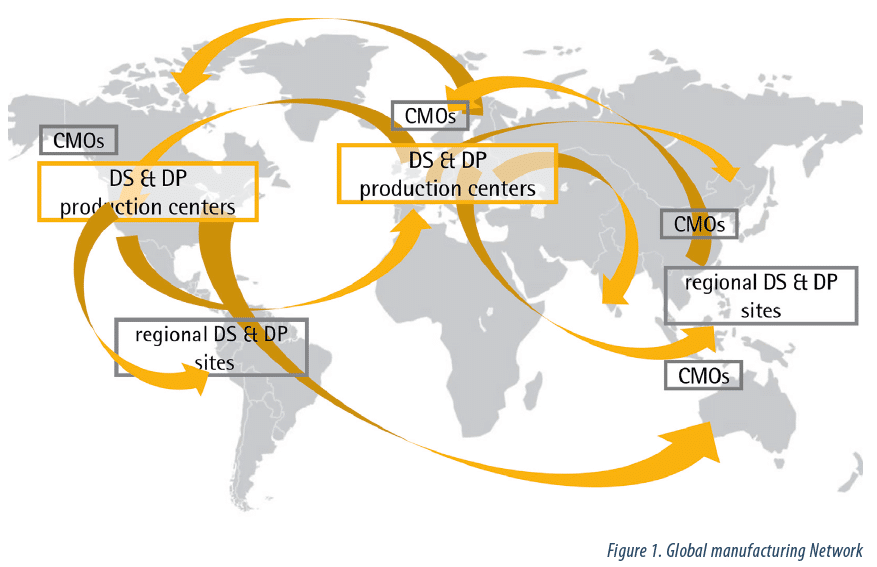
The complexity of biopharmaceutical manufacturing processes requires continuous improvement. As shown in figure 1, the expansion of manufacturing capacity worldwide has resulted in the multiplication of links between production facilities as well as the increasing need for storage or transportation of media, intermediate, BDS, and drug products between sites over the world.
Outsourcing to contract manufacturing organizations (CMOs) offers a solution to the capacity constraints and reduces the total risks associated with building internal capacity; however, a robust and validated manufacturing process (2), including product transportation between facilities, is then required.
Immense pressure is being applied to improve process knowledge and execution for those working in the field of bio-therapeutic manufacturing. Bioprocess developers are being tasked to provide more product yield at lower production cost, to decrease the time required to bring new therapies to the patient, and to consistently manage operational risks.